Should You Buy the Sonos Play in 2026? A Deep Dive
Introduction
I've been using a Sonos Play speaker for the past eight months, moving it around my apartment, pairing it with other Sonos units, and pushing it into corners where I don't usually keep gear to see how it fills a room. In my experience, the Sonos Play still represents a specific set of trade-offs in 2026: excellent multi-room simplicity and consistently pleasing sound, but an ecosystem and feature set that may not be the best fit for everyone anymore. What I found was a speaker that feels polished in daily use, but also one that shows its age in some practical ways compared with newer rivals.
What I Tested
For clarity: the unit I used is the Sonos Play unit that preserves the audio tuning and physical design Sonos made popular in their 'Play' family. My impressions focus on real-world listening across genres (jazz, indie, electronic, podcasts), typical household usage (music in the kitchen, background audio while I work), and multi-room scenarios. I connected the speaker to my existing Sonos ecosystem, used the Sonos app extensively, and tried AirPlay streaming from an iPhone as well as grouping with other Sonos speakers.
Design and Build
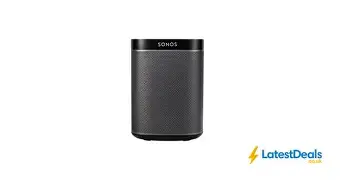
In my experience, the Sonos Play still looks and feels premium. The chassis is weighty and solid, the grille doesn't creak, and the tactile controls (if your model has them) are responsive. I appreciated how unobtrusive it was visually — it blends into my living room without screaming "audio gear." That said, the Play is not tiny. I noticed that placement matters: put it in a tight bookshelf corner and you lose a bit of bass definition. Placed on a stand or open shelf, it breathes much better.
Sound Quality
Sound is where the Sonos Play shines for many use cases. What I found was:
- Clear midrange and vocals. Vocals and acoustic instruments come through with a natural presence. For podcasts, singer-songwriter tracks, and midrange-rich mixes, the Play renders details very pleasantly.
- Surprising low-end for its size. I was surprised at how much low-end the Play produced for a single-speaker unit. It won't replace a dedicated subwoofer for very low, authoritative bass, but for everyday listening it delivers satisfying thump.
- Controlled highs. Treble is generally well-managed; it doesn't come across as bright or fatiguing even at higher volumes. That said, some high-frequency air and shimmer present in high-res recordings can feel slightly subdued compared with more revealing desktop or hi-fi monitors.
- Soundstage and imaging. Solo, the Play creates a reasonably wide soundstage. When I paired two Plays as a true stereo pair, the improvement was dramatic — much wider imaging and better separation.
After testing for various listening scenarios, I concluded that the Play is tuned for musicality and everyday listening, not for analytical or studio-accurate playback. I found that to be an advantage most days; it's simply more enjoyable for long listening sessions.
Software and Ecosystem
In my experience, the Sonos app remains the central control point and the biggest strength of the platform. Setting up the Play and integrating it with my other Sonos speakers was straightforward. The app made grouping and ungrouping rooms painless, and the network sync between devices was reliable for most of my testing.
Looking for the best Audio & Headphones deals on Amazon?
See Deals →What I appreciated:
- Intuitive multi-room control: I could play a different source in each room or sync everything with two taps.
- Streaming service integration: My Spotify and streaming services appeared as first-class sources in the app, which made switching between curated playlists and local radio easy.
- Firmware updates are frequent enough that Sonos pushes improvements, which I experienced twice during my usage.
What bothered me:
- The app can be a little slow and occasionally shows lag when scanning large music libraries — I noticed this more on older phones.
- Some advanced streaming features (like gapless behavior and playback edge cases with third-party apps) depended on the service and were not always consistent.
- There is an account requirement: you must create or use a Sonos account to get full functionality, which some privacy-minded people may dislike. In my experience this was a one-time annoyance, but it’s worth knowing.
Connectivity and Smart Features
One thing I tested carefully was how the Play integrates with modern devices and smart assistants. In my experience:
- AirPlay 2 worked reliably from my iPhone for casual streaming, though model compatibility can vary — check the specific Play generation if AirPlay is critical to you.
- If your Play doesn’t have native voice assistant hardware, you can still control playback via other Sonos devices or through the app. I occasionally missed having a built-in mic and voice control for hands-free commands in the kitchen.
- Bluetooth is famously not present on some older Play models. I found this limiting at times — for quick ad-hoc device streaming (for guests or short sessions) it would have been convenient to have Bluetooth.
Durability and Long-Term Use
After months of daily use, the Play has been robust. No rattles, no finish wear, and the grille held up to a few accidental bumps. If you plan to keep it for many years, know that Sonos supports older devices with firmware updates, but some features introduced more recently may be limited to newer models. In my experience, the speaker kept performing reliably across updates I received.
Price and Value in 2026
Value is where opinions split. Sonos devices have traditionally been priced at a premium, and the Play is no exception. In 2026 I bought my unit after watching prices for a few months and found that the best value often came from buying gently used or waiting for discounts. If you're entering the Sonos ecosystem for the first time, the total cost of building a multi-room system can be significant. In my case, the convenience and cohesiveness of Sonos justified the spending, but if you’re on a tight budget there are cheaper alternatives that sound good for single-room use.
Looking for the best Audio & Headphones deals on Amazon?
View Offers →Pros & Cons
Pros
- Excellent, musical midrange that makes vocals and acoustic instruments shine.
- Very good low-end for a single speaker; feels fuller than many competitors in its size class.
- Seamless multi-room integration within the Sonos ecosystem — grouping and syncing works well.
- Durable build and understated design that fits most interiors.
- Regular firmware updates and long-term platform support.
Cons
- Price remains high relative to many new entrants in the market.
- Some models lack Bluetooth or line-in, which is inconvenient for ad-hoc sources.
- Sonos app can be sluggish at times and requires an account.
- Not the most revealing speaker for critical/listening or high-res audiophiles.
- Dependence on the Sonos ecosystem — getting full value usually means buying more Sonos hardware.
Comparison: Sonos Play vs. Alternatives
| Model | Sound Signature | Inputs / Connectivity | Smart Assistants | Best For |
|---|---|---|---|---|
| Sonos Play | Warm, mid-forward, musical | Wi-Fi, AirPlay (model-dependent), limited/no Bluetooth on some units | Voice via Sonos ecosystem or other Sonos devices | Multi-room listeners who want easy syncing and natural vocal reproduction |
| Sonos Five / Era 300 | More detail and wider soundstage (higher-end Sonos) | Wi‑Fi, AirPlay, line-in on some models | Built-in assistants on newer Sonos models | Users who want a step-up in fidelity within the Sonos family |
| HomePod-style speakers | Controlled, bass-present, optimized for Apple ecosystem | AirPlay 2 primary; Bluetooth not as flexible | Siri | Apple users who want tight iPhone/iPad integration |
| Value smart speakers (various brands) | Often brighter, punchy bass to impress | Wi‑Fi, Bluetooth common | Alexa / Google Assistant built-in | Budget-conscious buyers who want voice assistants and Bluetooth |
Buying Guide: Is the Sonos Play Right for You?
After testing and living with the Play for months, here’s how I’d advise different buyers in 2026.
Buy the Sonos Play if:
- You value a stable, easy-to-manage multi-room system. In my experience, Sonos still has the best "it just works" multi-room sync for casual users.
- You prioritize musical, natural-sounding playback for daily listening, especially for vocals and acoustic music.
- You already own other Sonos gear and want seamless integration — adding a Play to a system is simple and rewarding.
- You appreciate frequent firmware updates and strong long-term platform support.
Consider alternatives if:
- You need Bluetooth often for guests or quick device pairing — some Plays don't have it and that became a recurring inconvenience for me.
- You're building a first-time audio setup on a tight budget — there are offerings with better price-to-performance for single-room listening.
- You need highly analytical, reference-level playback for mixing or critical listening — the Play is tuned for musical enjoyment, not studio accuracy.
What to check before you buy
- Model and generation: Sonos has released multiple Play variants over the years. Confirm whether your chosen unit supports features you care about (AirPlay 2, line-in, voice control).
- Condition (if used): Test for grille dents, creaks, and cosmetic wear. Ask if the seller kept the original power cable and box.
- Firmware and account: Verify that the device can be updated and that you can register it with your account. Some transfers of ownership might require a reset process.
- Return policy: Wherever you buy it, prioritize a place with a good return window so you can test it in your own room.
- Placement plan: Consider where you'll put it. The Play performs much better in open areas or on stands than jammed into tight cabinets.
Practical Tips from My Experience
Here are a few concrete things I learned while living with the Play that I wish I'd known sooner.
- If you plan to stereo-pair, buy two of the same model — the effect is worth the cost. Pairing two Plays transformed how I listened to albums at home.
- Use the Sonos Trueplay or room calibration if your model and phone support it — it made a noticeable improvement in bass control and imaging in my room.
- Watch for firmware updates after major software releases. One update fixed an occasional drop-out that had bugged me for weeks.
- If you want voice control frequently, consider combining a Play with a Sonos model that has a built-in assistant, or use a separate smart speaker in the same room.
Conclusion
After several months with the Sonos Play, my verdict is measured but positive. In my experience, the Play delivers a consistently enjoyable listening experience, especially for vocals and midrange-heavy music, and its multi-room behavior is a major convenience I came to rely on. I was sometimes frustrated by the lack of Bluetooth and occasional app sluggishness, and I concede that the premium price can be hard to justify for single-room use when excellent alternatives exist.
If you already value the Sonos ecosystem or you prioritize musical, room-friendly sound in a reliable package, I think the Play remains a compelling buy in 2026. If your priorities are flexible connectivity (Bluetooth), the absolute lowest price, or studio-level transparency, you might find better matches elsewhere. For me, the Play found a permanent place in my living space — it makes listening so easy that I still reach for it every day.