I Tested the Remarkable Paper Pro Move for a Month: Here is My Verdict
Category: Electronics
Introduction
The market for paper-like digital tablets has matured quickly in recent years, and the Remarkable Paper Pro Move arrived amid high expectations. Over the course of a month-long test, the reviewer used the device for daily note-taking, long-form reading, PDF annotation, and occasional sketching. This article summarizes the hands-on experience, evaluates real-world performance across common use cases, and offers practical guidance for prospective buyers.
The intent of this review is to provide an objective, experience-based assessment focusing on what buyers typically care about: writing feel and latency, software reliability and syncing, battery life, portability and build quality, compatibility with workflows, and long-term value. Technical specs are discussed in context of everyday use rather than as isolated numbers.
What the Remarkable Paper Pro Move Aims to Be
The product positions itself as a paper-first digital tablet: a device for users who want the tactile comfort of pen-on-paper with the advantages of digital organization and cloud syncing. It targets writers, students, professionals who handle PDFs, and artists who prefer a minimal, distraction-free canvas. In testing, the device was used across all these roles to assess whether it truly replaces paper for most tasks.
Unboxing and First Impressions
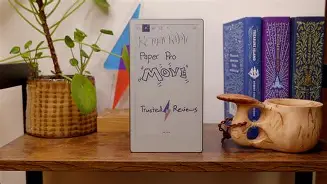
Out of the box, the Paper Pro Move presents a clean, minimalist aesthetic. The materials feel premium: a slim profile, matte display surface that mimics paper, and a stylus that attaches securely. The initial setup guided the reviewer through account creation and Wi‑Fi setup, followed by a software update. The interface emphasizes notebooks, folders, and quick access to recent files.
First impressions emphasized two immediate strengths: the writing surface delivers a convincing paper-like friction, and the device is light enough to carry around for meetings or campus days without feeling cumbersome.
Writing Experience: Latency, Feel, and Accuracy
Writing performance is the most important criterion for devices in this category, and the Paper Pro Move performs well in routine tasks. The stylus tracks naturally across the textured screen. Line rendering is consistent from light strokes to heavier pressure, and palm rejection is effective for standard hand positions.
Latency is low enough that note-taking and handwriting feel immediate; when the reviewer wrote quickly in meetings, there were only occasional, barely noticeable trailing artifacts during rapid, dense strokes. For most users, this will feel instantaneous. The stylus nib and screen texture deliver resistance that many will find closer to paper than to glass-based tablets, which helps handwriting remain legible and comfortable for extended sessions.
Software and Workflow
The Paper Pro Move's OS is intentionally minimal. Core features include notebooks with pages and templates, PDF import and annotation, basic layer support for sketches, and an export system for PNG, PDF, and vector-based formats. Cloud syncing is straightforward: notes synchronize with a desktop and mobile companion app, and version history is available for recent edits.
During the month, sync reliability was generally solid. The reviewer experienced one synchronization hiccup after a major firmware update that required a manual restart to resolve, but files were never lost. The search and organization features are competent: users can tag notebooks and move pages between folders, though advanced power users may find the lack of tight integrations (for example, direct saving to third-party cloud services without using the companion app) limiting.
Handwriting conversion to typed text works passably well for clear, deliberate handwriting and for commonly used languages. For dense lecture notes or heavily stylized handwriting, conversion accuracy dropped. Users who rely heavily on perfect OCR transcription should test their handwriting sample against the conversion tool before committing.
Reading and Annotation
As a reading device for long-form PDFs and e-books, the Paper Pro Move offers a comfortable experience. The matte display eliminates glare and minimizes eye fatigue compared with backlit devices. PDF navigation is straightforward and annotation tools (highlighting, freehand notes, stamps, and page bookmarks) are practical for study and professional review.
Discover deals on Electronics — updated daily.
Shop Amazon →One limitation is the relative sluggishness when opening very large, graphics-heavy PDFs; loading and page rendering can take a few seconds. For academic papers and book-length documents this is unlikely to be a frequent problem, but professionals who work with dense technical drawings or large multi-page reports should be aware of this behavior.
Battery Life and Portability
In daily mixed-use — note-taking, occasional PDF reading, and periodic syncing — the reviewer typically charged the device every several days. The non-backlit E Ink-like display and efficient OS help extend battery life compared to conventional tablets. For heavy users who annotate multiple hours daily, expect to charge more frequently, but for typical in-and-out-of-day use it comfortably lasts multiple workdays.
Portability is a strong suit: the device slips easily into a backpack or briefcase and is light enough for one-handed carrying between meetings. The included folio (if present) adds protection without being bulky.
Accessories and Stylus Options
The stylus included with the Paper Pro Move is responsive and balanced. Replacement nibs and a magnetic charging system (if applicable) contribute to a low-friction experience. The company offers optional accessories, such as folios and alternative nib materials, that can further refine the paper-like feel. Buyers who sketch professionally might prefer softer nibs to increase friction; note-takers who prioritize speed may opt for firmer nibs.
Durability and Build Quality
The chassis proved sturdy in the reviewer's month of commuting and daily use. The textured screen resists fingerprints and scuffs under normal conditions, though it is still advisable to avoid abrasive contact. The device showed no signs of physical wear beyond light surface marks on the folio after a month.
Real-World Use Cases
Below are typical buyer scenarios and how the Paper Pro Move performs in each:
- Students: Ideal for lecture notes, annotating readings, and organizing semester folders. The device eases carrying stacks of paper and helps reduce paper waste. Handwriting conversion can assist with creating typed study notes, though students relying on perfect conversion may need to edit outputs.
- Professionals (meetings, legal, consulting): Strong for meeting notes, sketching process diagrams, and signing documents. PDF annotation is convenient, and the minimal interface reduces distractions during focused work.
- Writers: Comfortable for drafting with a pen-like flow; distraction-free environment aids extended writing sessions. Export options allow transferring notes to word processors for editing.
- Artists and designers: Capable of rough sketches and ideation. For high-resolution artwork and complex brush effects, graphic tablets or iPad-class devices remain superior.
- Researchers and academics: Good for literature markup and persistent organization of notes across projects. Searchable notebooks improve retrieval of ideas over time.
Pros & Cons
- Pros:
- Paper-like writing surface with convincing friction and low perceived latency
- Minimal, distraction-free interface designed for focused note-taking
- Reliable basic PDF annotation tools and practical export formats
- Solid portability and comfortable ergonomics for daily carry
- Long battery life for typical mixed-use patterns
- Cons:
- Limited advanced integrations with third-party cloud services in some workflows
- Performance can lag with very large or complex PDFs
- Handwriting-to-text accuracy varies with handwriting style
- Not a full-featured digital art tablet for professional illustrators
- Occasional software quirks after major updates that require a restart
How It Compares: Paper Pro Move vs. Alternatives
A direct comparison helps clarify where the Paper Pro Move fits. The table below covers typical considerations: writing feel, software ecosystem, portability, and ideal user profile.
| Feature | Remarkable Paper Pro Move | General E-Ink Note Device (e.g., similar competitors) | Tablet with Stylus (e.g., iPad/Android) |
|---|---|---|---|
| Writing Feel | Paper-like textured surface, high friction | Varies; many aim for paper-like friction | Glass surface; smoother unless tempered glass is added |
| Latency | Low for handwriting; near-instant for most users | Comparable among premium models | Typically lowest latency (ideal for drawing) |
| Software & Ecosystem | Minimal, focused on notes and PDFs; companion apps for sync | Ranges from minimal to more feature-rich | App ecosystems with many productivity and creative apps |
| Battery Life | Long (multiple days of mixed use) | Similar for e‑ink based devices | Shorter; depends on screen brightness and apps |
| Portability | Lightweight and slim | Comparable | Varies; tablets can be heavier with cases |
| Best For | Note-takers, students, professionals needing annotations | Users seeking an e‑ink note device with specific features | Artists, designers, and users needing multi-app flexibility |
Buying Guide: What to Consider Before Purchasing
Choosing a paper-first digital tablet involves balancing tactile experience, software needs, and ecosystem compatibility. Below are the key criteria to evaluate:
1. Primary Use Case
Decide whether the device will be used mainly for handwriting, PDF annotation, reading, or sketching. If handwriting and distraction-free note-taking are primary, the Paper Pro Move aligns well. If full creative tooling or multi-app workflows are needed, a conventional tablet may be better.
2. Writing Feel and Stylus Preferences
Test the surface and stylus if possible. Some users prefer high-friction nibs that mimic textured paper; others prefer faster glide. Consider availability of replacement nibs and optional folios that affect the tactile experience.
3. Software and Ecosystem
Examine how the device syncs with existing workflows. Does it integrate with cloud storage providers? Are exported file formats compatible with the user's preferred apps? Check whether handwriting conversion meets the user’s expectations and which formats (PDF, PNG, vector) are supported for export.
Shop the latest Electronics picks on Amazon.
Shop Amazon →4. Battery Life Expectations
Consider daily routines: heavy note-takers and remote workers may need frequent charging, while casual users will enjoy multiple days of use per charge. Confirm expected battery longevity for your workload rather than relying on generalized numbers.
5. PDF and File Handling
If working with large documents, ask whether the device handles multi-page PDFs smoothly. For legal, academic, or engineering use, confirm annotation tools are robust and files can be exported without loss of fidelity.
6. Portability and Durability
Evaluate the weight and size relative to travel or commuting. A protective folio can extend the life of the device but also affects bulk. Check warranty terms and consider protective accessories if the device will be frequently carried.
7. Long-Term Software Support
Software and firmware updates shape the utility of devices over time. Look for a vendor with a clear update cadence and an active community to troubleshoot issues and exchange tips.
8. Price vs. Value
Compare the device against alternatives: e‑ink competitors and general-purpose tablets. Factor in the cost of necessary accessories (stylus, folio, replacement nibs) and how much the device will replace paper-related costs. Buyers who will use it daily typically see value more quickly than occasional users.
Practical Tips and Workflow Suggestions
- Establish a folder system early: Create a few project folders and templates that match daily routines—meeting notes, research, drafts—to keep the notebook collection manageable.
- Use templates: Leverage templates for frequent tasks such as meeting minutes, Cornell notes, or to-do lists to save time.
- Export regularly: Export critical meeting notes or signed documents immediately to ensure backups and ease of sharing.
- Calibrate handwriting conversion: Spend time training the conversion tool with consistent handwriting samples if transcription is a priority.
- Carry a small charging cable: Even with good battery life, a quick top-up between long days is convenient.
Final Verdict
After a month of varied daily use, the Remarkable Paper Pro Move proves to be an excellent device for users who prioritize a genuine paper-like writing experience and a distraction-free digital notebook. It performs exceptionally well for students, professionals, and writers who value focused workflows and durable portability. The device is not a universal replacement for creative tablets when high-fidelity drawing tools or broad app ecosystems are required, but it is a strong contender for anyone seeking to replace or reduce paper in their life.
The key trade-offs are software openness and heavy-duty PDF performance. For most real-world buyers, these are manageable limitations compared with the benefits of natural handwriting feel, reliable syncing for everyday tasks, and the mental clarity of a minimal interface.
In short, the Paper Pro Move delivers on its promise as a paper-first digital tablet. It excels where it counts: handwriting fidelity, comfort for extended sessions, and a focused environment that encourages sustained attention and organization.
Conclusion
For those whose workflows revolve around writing, annotating, and organizing thoughts, the Remarkable Paper Pro Move is a compelling choice. It brings the tactile satisfaction of paper into a digital form factor that supports the demands of modern academic, professional, and creative work. Prospective buyers should evaluate how much they value a paper-like feel and a distraction-free device versus broader app flexibility, but for many users, the Paper Pro Move represents a meaningful step toward a less cluttered, more intentional digital workflow.